When it comes to skincare, Vitamin C and Niacinamide are two of the most popular ingredients recommended by dermatologists. Both offer impressive benefits, but they work in different ways and target different skin concerns.
If you’re wondering which one is better, this guide will help you understand the differences, advantages, disadvantages, and whether you can use them together.
What Is Vitamin C?
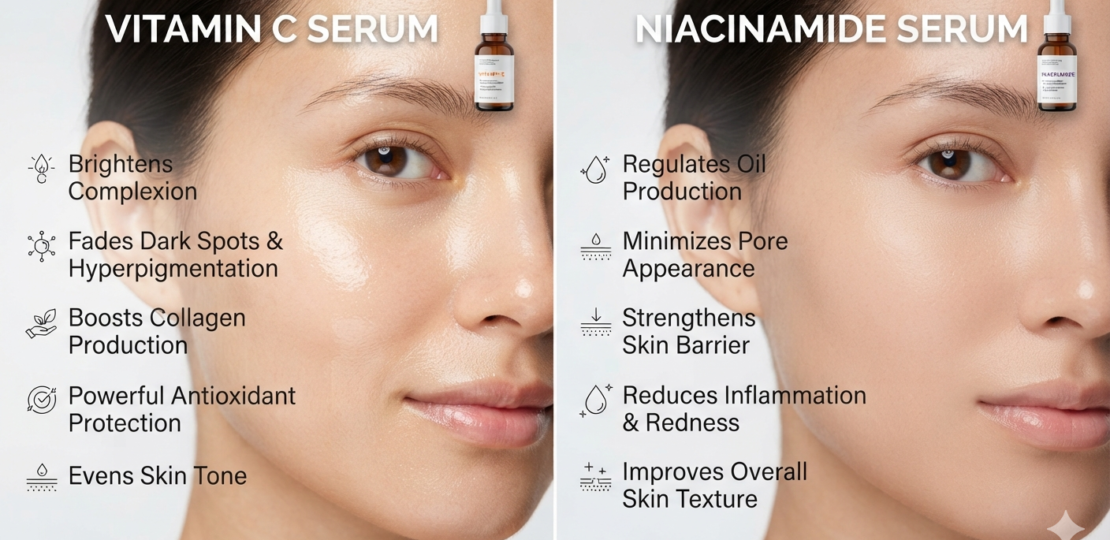
Vitamin C is a powerful antioxidant that helps protect the skin from damage caused by pollution and UV exposure. It is well known for brightening the skin and reducing the appearance of dark spots.
Benefits of Vitamin C
Brightens dull skin.
Helps fade acne scars and hyperpigmentation.
Promotes collagen production for firmer skin.
Reduces the appearance of fine lines.
Protects against environmental damage caused by free radicals.
Gives the skin a healthy, radiant glow.
Disadvantages of Vitamin C
Can cause irritation in people with sensitive skin.
Some formulas may sting when first applied.
Becomes less effective if exposed to heat, air, or sunlight.
Results may take several weeks to become noticeable.
What Is Niacinamide?
Niacinamide is a form of Vitamin B3 that strengthens the skin barrier, reduces oil production, and improves overall skin health. It is one of the most versatile skincare ingredients because it works well for almost all skin types.
Benefits of Niacinamide
Reduces excess oil production.
Minimizes the appearance of enlarged pores.
Strengthens the skin’s natural barrier.
Helps reduce redness and inflammation.
Improves uneven skin tone.
Suitable for sensitive skin.
Helps keep the skin hydrated.
Disadvantages of Niacinamide
Results may appear gradually.
Some people may experience mild irritation when first using high concentrations.
Does not brighten skin as quickly as Vitamin C in some individuals.
Vitamin C vs. Niacinamide
Feature Vitamin C Niacinamide
Main Benefit Brightens skin and fades dark spots Controls oil and strengthens the skin barrier
Best For Dull skin, pigmentation, sun damage Oily skin, redness, enlarged pores
Skin Type Most skin types, but may irritate sensitive skin Suitable for nearly all skin types
Anti-Aging Excellent for boosting collagen Helps improve fine lines and skin texture
Oil Control Minimal Excellent
Which One Is Better?
The answer depends on your skin concerns.
Choose Vitamin C if you:
Want brighter, glowing skin.
Have dark spots or acne marks.
Want to improve sun-damaged skin.
Are concerned about early signs of aging.
Choose Niacinamide if you:
Have oily or acne-prone skin.
Want to reduce redness.
Have enlarged pores.
Need to strengthen your skin barrier.
Have sensitive skin.
Can You Use Vitamin C and Niacinamide Together?
Yes. In the past, people believed these ingredients should not be used together, but modern research has shown that they can be safely combined in most skincare routines.
Using both ingredients may provide even better results because they complement each other.
A simple routine could look like this:
Morning
Cleanser
Vitamin C serum
Moisturizer
Sunscreen
Evening
Cleanser
Niacinamide serum
Moisturizer
Some skincare products even contain both ingredients in one formula.
Possible Side Effects
Both ingredients are generally well tolerated, but some people may experience:
Mild redness
Dryness
Temporary irritation
Slight tingling when first starting
Always perform a patch test before using a new skincare product and introduce one new ingredient at a time.
Final Thoughts
Vitamin C and Niacinamide are both excellent skincare ingredients, but they serve different purposes.
If your goal is brighter skin and fading dark spots, Vitamin C is often the better choice.
If you want better oil control, smaller-looking pores, and a stronger skin barrier, Niacinamide may be more suitable.
For many people, the best approach is not choosing one over the other—but using both as part of a well-rounded skincare routine.
Disclaimer: This article is for educational purposes only and should not replace advice from a dermatologist or other qualified healthcare professional. If you have persistent skin concerns or allergies, consult a healthcare provider before starting new skincare products.
RELATED POSTS
View all

Microshading vs. Microblading: Which Is Better? Pros, Cons, and How to Choose
July 26, 2026 | by iveekaur
5 Skincare Mistakes That May Be Making Your Acne Marks Darker
September 18, 2026 | by iveekaur