Keratin Treatment vs. Hair Rebonding: Which One Is Better for Your Hair?
July 26, 2026 | by iveekaur
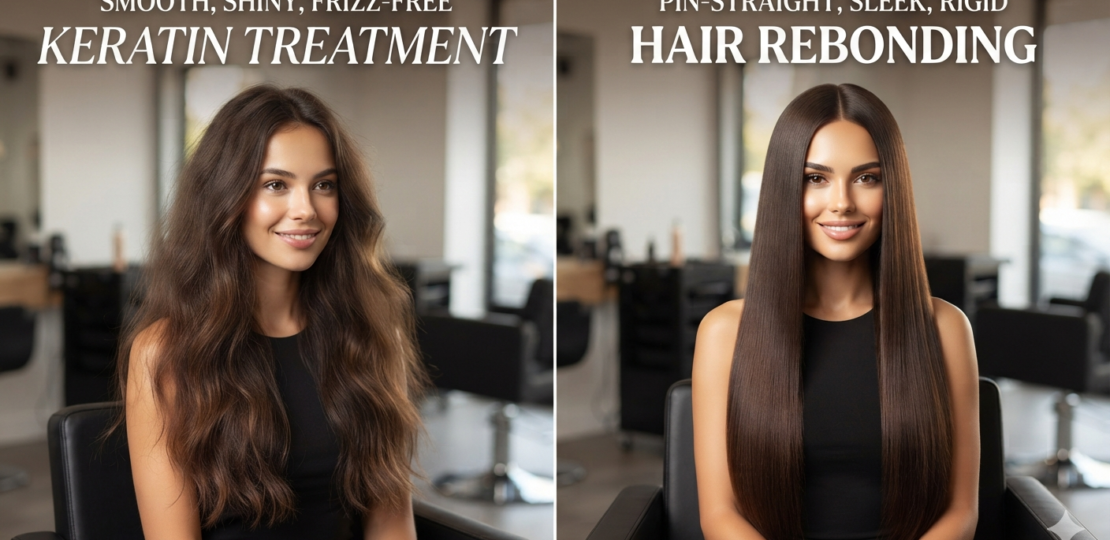
If you dream of smooth, shiny, and manageable hair, you’ve probably heard about keratin treatment and hair rebonding. While both treatments help reduce frizz and improve your hair’s appearance, they are very different in how they work and the results they provide.
In this guide, we’ll compare keratin treatment and hair rebonding, including their advantages, disadvantages, and who they’re best suited for.
What Is a Keratin Treatment?
A keratin treatment is a semi-permanent hair smoothing treatment that coats the hair with keratin, a natural protein found in your hair, skin, and nails. Heat is used to seal the keratin into the hair, making it smoother, shinier, and easier to manage.
Unlike rebonding, keratin treatment does not permanently change your hair’s natural structure.
Advantages of Keratin Treatment
Reduces frizz and flyaways.
Adds shine and softness.
Makes hair easier to style.
Helps repair the appearance of damaged hair.
Suitable for most hair types, including colored hair.
Maintains some of your hair’s natural movement and volume.
Disadvantages of Keratin Treatment
Results are temporary, usually lasting 3 to 6 months.
Requires sulfate-free shampoo to help maintain the results.
Can be expensive depending on hair length.
Some products may contain formaldehyde or release formaldehyde during the treatment, so it’s important to choose a reputable salon that uses approved products.
What Is Hair Rebonding?
Hair rebonding is a chemical treatment that permanently changes the structure of your hair, turning naturally wavy or curly hair into straight hair. The process breaks the hair’s natural bonds and then rebuilds them in a straight position.
Because it permanently alters the hair, only new hair growth will retain your natural texture.
Advantages of Hair Rebonding
Produces sleek, pin-straight hair.
Long-lasting results.
Greatly reduces daily styling time.
Ideal for people who want permanently straight hair.
Resistant to humidity compared with untreated hair.
Disadvantages of Hair Rebonding
Uses strong chemicals that may weaken the hair.
Not recommended for severely damaged or over-processed hair.
Requires regular touch-ups as new hair grows.
Hair may become dry or brittle without proper care.
More difficult to switch hairstyles because the hair remains straight.
Keratin Treatment vs. Hair Rebonding
Feature Keratin Treatment Hair Rebonding
Purpose Smooths and reduces frizz Permanently straightens hair
Hair Texture Maintains natural movement Pin-straight hair
Lasts Around 3–6 months Permanent on treated hair
Hair Damage Generally less damaging Higher risk of damage due to strong chemicals
Best For Frizzy, dry, or slightly wavy hair Curly, wavy, or very unruly hair
Maintenance Sulfate-free products recommended Regular root touch-ups needed
Which One Is Better?
There isn’t a single treatment that’s best for everyone.
Choose a keratin treatment if you:
Want smoother, shinier hair without losing your natural texture.
Have frizzy or slightly wavy hair.
Prefer a treatment that gradually fades over time.
Want healthier-looking, easier-to-manage hair.
Choose hair rebonding if you:
Want permanently straight hair.
Have thick, curly, or very wavy hair.
Don’t mind regular root touch-ups.
Prefer a sleek, straight hairstyle every day.
Aftercare Tips
Whether you choose keratin treatment or rebonding, proper aftercare is essential.
Use a gentle, sulfate-free shampoo if recommended by your stylist.
Deep-condition your hair regularly.
Minimize heat styling to reduce further damage.
Protect your hair from excessive sun exposure and chlorine.
Trim split ends regularly to keep your hair looking healthy.
Final Thoughts
Both keratin treatment and hair rebonding can transform your hair, but they serve different purposes.
If your goal is smooth, healthy-looking hair with natural movement, a keratin treatment is usually the better choice.
If you want permanently straight hair and are willing to maintain it with regular touch-ups, hair rebonding may be the right option.
Before choosing either treatment, consult an experienced hairstylist who can assess your hair’s condition and recommend the option that best suits your hair type and lifestyle.
Disclaimer: This article is for informational purposes only and should not replace professional advice. Results vary depending on your hair type, the products used, and the skill of the stylist.
RELATED POSTS
View all

Best Skincare Routine for Acne-Prone Skin: What Actually Helps?
September 10, 2026 | by iveekaur
Botox vs. Dermal Fillers: What’s the Difference and Which One Is Better?
July 26, 2026 | by iveekaur