

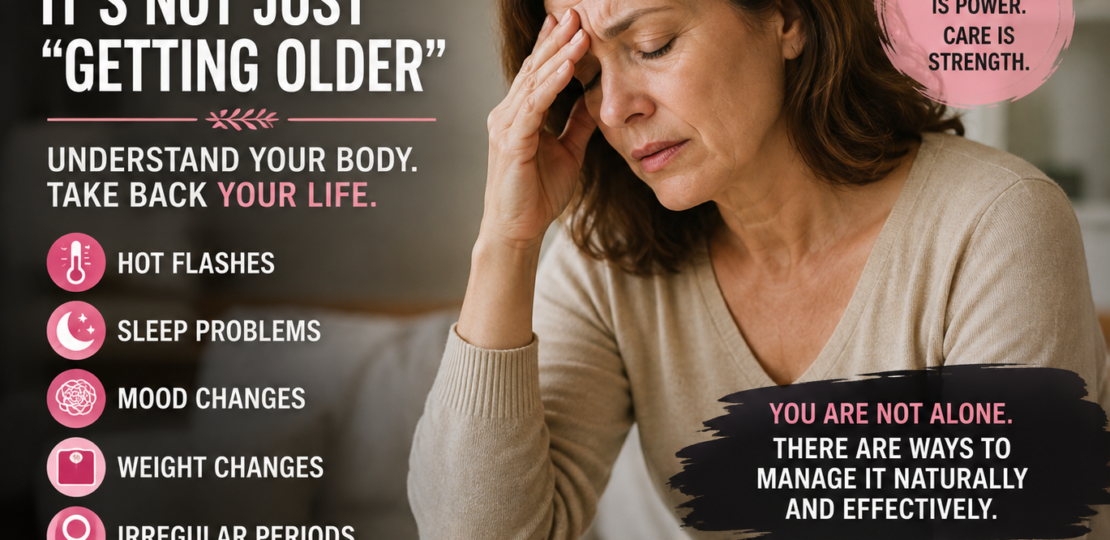
Menopause is a natural stage of life, but the changes it brings can sometimes feel confusing or difficult. Hot flashes, mood changes, poor sleep, weight changes and irregular periods are common experiences for many women.
Understanding what is happening can make this transition easier to manage.
What Is Menopause?
Menopause is reached when a woman has gone 12 consecutive months without a menstrual period, and there is no other medical reason for the absence of periods.
It usually happens between the ages of 45 and 55, although the timing can vary.
Before menopause comes perimenopause, the transition when hormone levels begin changing and periods may become irregular.
Common Symptoms
Menopause can affect women differently. Possible symptoms include:
– Hot flashes and night sweats
– Irregular or changing periods
– Difficulty sleeping
– Mood changes or irritability
– Vaginal dryness
– Lower sexual desire
– Fatigue
– Headaches
– Difficulty concentrating or “brain fog”
– Changes in body weight or body shape
– Joint or muscle aches
Not every woman experiences all of these symptoms.
How Can You Manage Menopause?
1. Stay Physically Active
Regular exercise can support your bones, muscles, heart and overall well-being. Walking, strength exercises, swimming, dancing and other activities you enjoy can all be useful.
2. Pay Attention to Your Diet
Try to eat a balanced diet containing vegetables, fruits, whole grains, protein sources and healthy fats.
Calcium- and vitamin-D-rich foods are particularly important because bone loss can accelerate around menopause.
3. Protect Your Sleep
Night sweats and hormonal changes can interfere with sleep. Keep your bedroom cool, maintain a regular sleep schedule and limit caffeine or alcohol if they affect your sleep.
4. Manage Hot Flashes
Keeping the room cool, wearing layers and identifying personal triggers can help. Some women notice that spicy foods, caffeine, alcohol, stress or hot environments make symptoms worse.
5. Look After Your Mental Well-Being
Hormonal changes, poor sleep and life changes can all affect mood. Regular physical activity, relaxation techniques, social connection and talking with someone you trust may help.
If you experience persistent sadness, severe anxiety or loss of interest in everyday activities, speak with a healthcare professional.
6. Don’t Ignore Vaginal or Urinary Symptoms
Vaginal dryness, discomfort during sex and urinary symptoms can occur during menopause. These problems are common and treatable, so you don’t have to simply tolerate them. A doctor or other qualified healthcare professional can discuss appropriate options.
What About Hormone Therapy?
Menopausal hormone therapy can be an effective treatment for certain symptoms, particularly hot flashes and night sweats, and may help prevent bone loss in appropriate patients.
However, it is not suitable for everyone. The benefits and risks depend on factors such as age, medical history and the type of treatment. Talk with a healthcare professional before starting hormone therapy or any menopause medication.
When Should You See a Doctor?
Don’t assume every symptom is caused by menopause.
Seek medical advice if symptoms are severe, unusual or interfering with your daily life. Any vaginal bleeding after menopause should be evaluated by a healthcare professional.
The Bottom Line
Menopause is not an illness—it is a natural stage of life. But that doesn’t mean women have to suffer through difficult symptoms without help.
A healthy lifestyle, good sleep, regular exercise, appropriate medical care and support can make the transition much easier.
Most importantly, listen to your body and don’t be afraid to ask for professional help when you need it.
RELATED POSTS
View all


Turmeric Benefits for the Body and Skin: What Science Says
July 29, 2026 | by iveekaur

Bitter Melon (Ampalaya): Health Benefits, Nutrition, and What the Science Says
July 29, 2026 | by iveekaur